




Let’s begin with a story I’ve told before, with good reason.
When Tom Osborne got on the elevator to go to the coaching offices on the second floor of the South Stadium — now gone — he was met by three or four players, all but one veterans. He acknowledged each by name, including a walk-on the veterans didn’t know. In addition, Osborne told the walk-on he had seen the walk-on’s high school had won the previous Friday.
Osborne got to know his players on a personal level, all of them.
He also placed an emphasis on walk-ons, something much more difficult now, with roster limits. Times have changed. Still, walk-ons were important to his success. “We’d save three to five scholarships to give to walk-ons who proved themselves,” Osborne said in a 2013 interview.
Among the most well-known, Isaiah Hipp and Jared Tomich.
Osborne was his own offensive coordinator for all 25 seasons as head coach. Mitch Krenk, a Husker tight end (1978-82), told me Osborne could tell if a play was likely going to work almost immediately after the snap and was always thinking ahead to the next play.
Tight ends carried in the plays at the time, so Krenk stood next to Osborne on the sideline. Being head coach and offensive coordinator was extremely challenging. Osborne was up to the challenge.
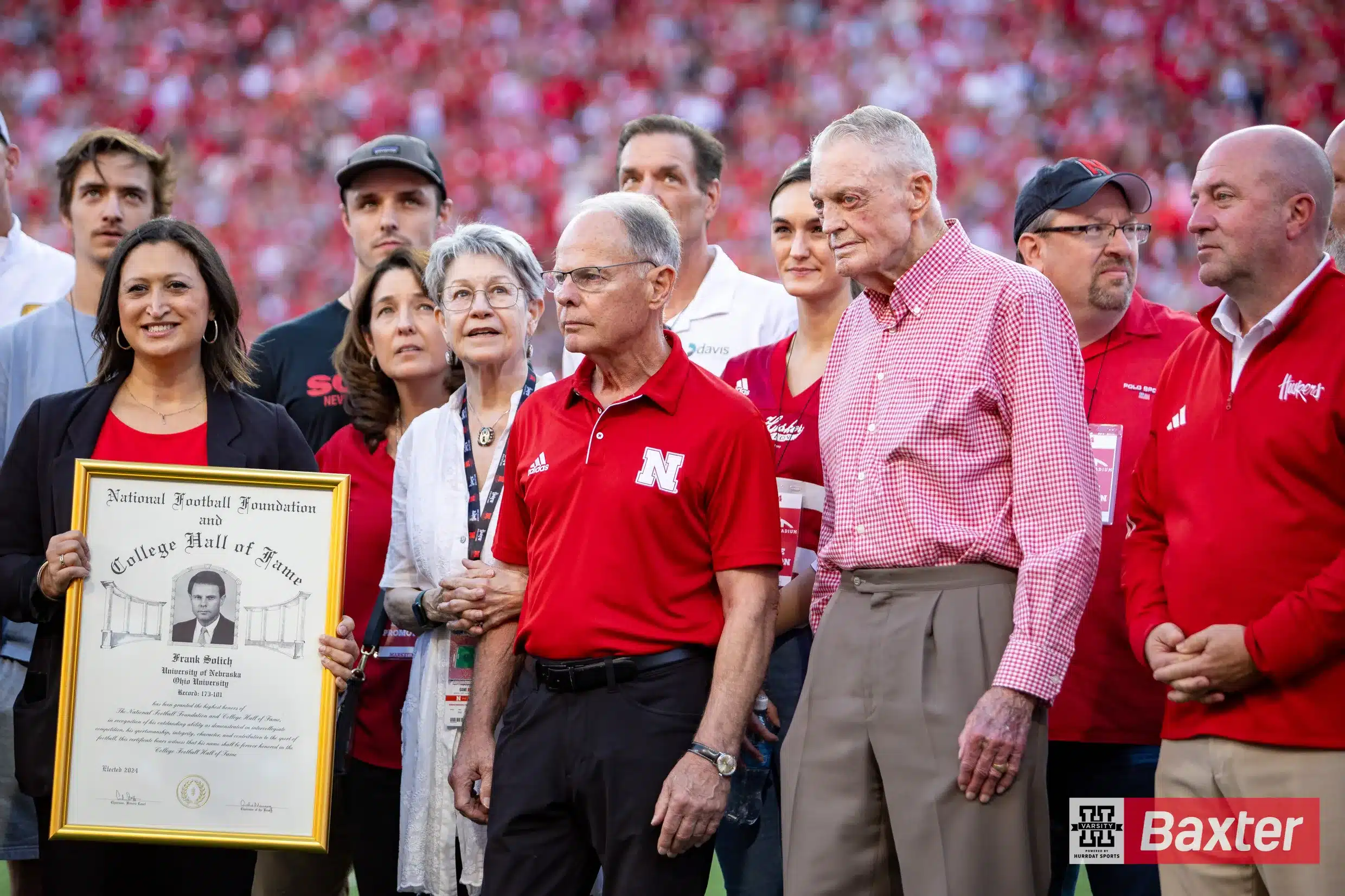
Osborne had staff stability, and was loyal to his assistants. He may have retired when he did to ensure Frank Solich, his hand-picked successor, actually succeeded him.
There are many things that could be recounted here to explain how Osborne’s record as Nebraska’s head coach was 255-49-5, with 13 conference titles and three national championships.
Here’s another story I’ve recounted many times. I was responsible for one of those 49 losses, something Kansas, Kansas State and Oklahoma State never accomplished.
And it was the first game I covered, writing for the Lincoln Journal and Star.
Two weeks before the 1978 Alabama game — two weeks after I started the job — Nebraska had its final scrimmage in Memorial Stadium. Reporters were allowed to watch. Afterward, Osborne assembled the players in the south end zone and told the defense if it played the way it had in the scrimmage, Alabama would be hard-pressed to score more than a touchdown.
I recounted what he said in my Sunday story.
Nebraska lost the game 20-3. Alabama dominated.
The following Monday, I was sent to cover the Extra-Point Club meeting. Those meetings included comments from Osborne, a scouting report on the next opponent by a grad assistant and film of the previous game, shown by, and with comments from, an assistant coach.
George Darlington was the assistant. And before he started the film, he said he wouldn’t show the film until a “certain sports writer” who cost them the game left. He was looking in my direction. Then he relented and said he’d show the film as long as that sports writer didn’t quote anything he said.
When I went to practice that day, I thought my dream job was over after a month. Back then only a handful of reporters covered the Huskers, so Osborne got to know everyone. Following his post-practice session, he asked me if we could talk. I figured the end was near.
He told me I was new on the job and didn’t know we could watch practices but we couldn’t write about what we saw or quote what we heard. We could ask about those things and he would answer or not. That was all he said. No reprimand.
I respected Osborne from the beginning, as a person as well as a coach, and understood how he was so successful in everything he did, not just coaching. Most notably, he served eight years in the House of Representatives, he served seven years as Husker athletic director and he and wife Nancy established the TeamMates mentoring program.
Osborne is going to be honored at the North Dakota game Saturday night for his induction into the State of Nebraska Hall of Fame. He’s the first living member of the Hall. Previously, the rule was inductees had to be deceased for at least 35 years. The change is appropriate, as is Osborne’s induction — in so many ways, too numerous to mention here.