




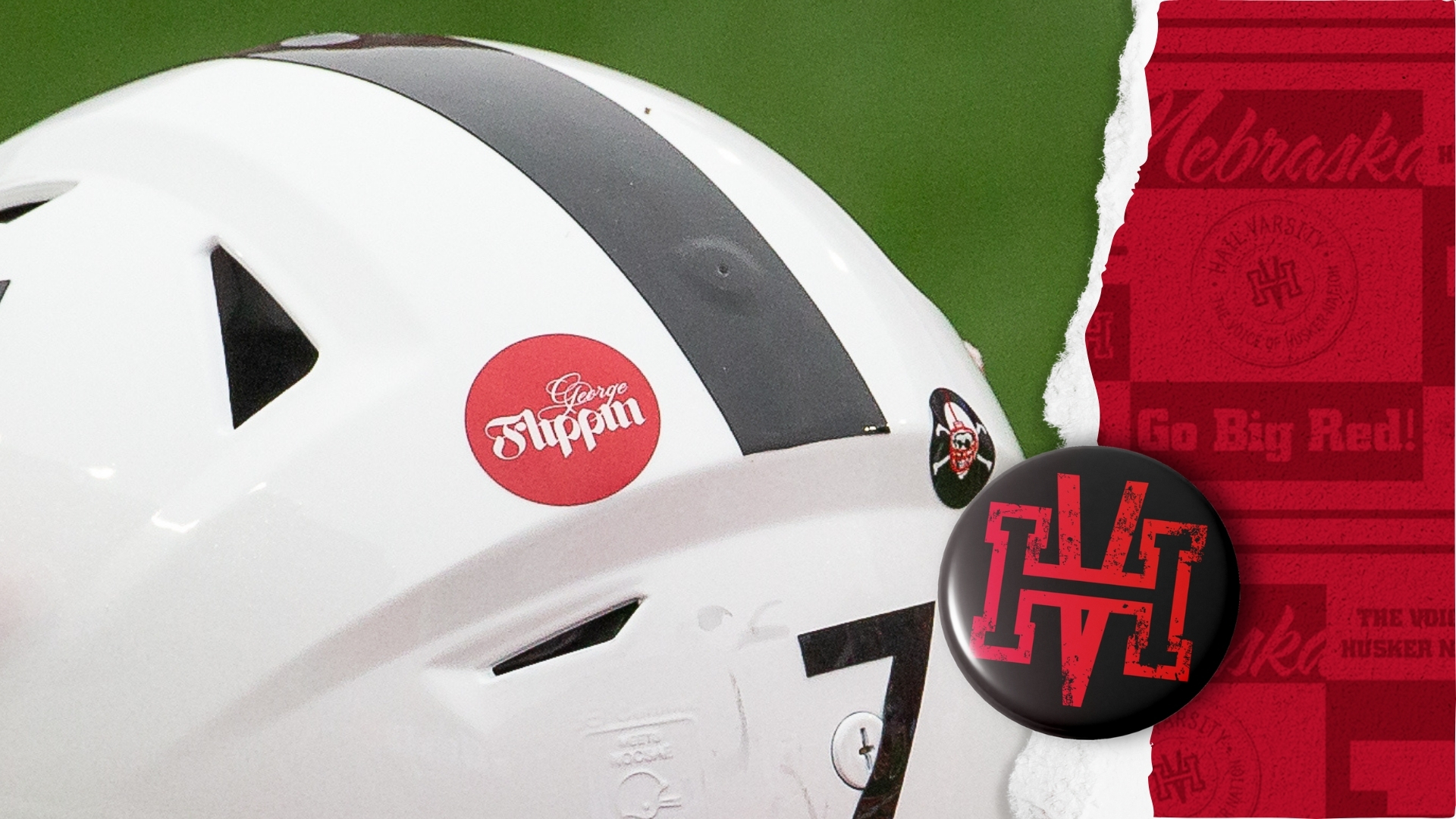
As noted last week, George Flippin was the first Black athlete at Nebraska, playing for the football team in the 1891 game against Iowa. He was a groundbreaker beyond that.
According to Arthur Ashe’s “A Hard Road to Glory: A History of the African American Athlete: Football,” published in 1993, Flippin, who was born in Ohio with his family eventually moving to Nebraska, was the fifth Black person to play football at a predominantly white university.
Flippin earned letters in 1892, 1893 and 1894. Nebraska was a member of the Western Inter-State University Foot Ball Association, which included Missouri. Missouri refused to play Nebraska in 1892 because of Flippin and forfeited 1-0. The conference forced the issue the next two seasons.
There were other racially motivated incidents involving Flippin, including an Omaha hotel initially refusing to serve the team after a game, only to give in when Flippin’s teammates refused to eat there unless he was included. The team ate in a separate dining area, away from other customers.
Flippin was elected Nebraska’s captain for the 1895 season. The election took place in December 1894, creating controversy on the team. Coach Frank Crawford disparaged Flippin, claiming it had nothing to do with race, and one player threatened to step away and start his own team. The majority of players stood by their voting and Flippin, however.
As it turned out, Flippin left Nebraska — as did Crawford, who went to coach at Texas — and played two seasons (1895-96) for a semi-pro football team in St. Joseph, Mo., the Tigers, before enrolling in the Chicago School of Physicians and Surgeons, where he was paid to play football. After graduating there, he would eventually return to Stromsburg, Neb., joining his father, also a doctor, to open a hospital and serve the community as a noted doctor.
Accounts indicate he would make home visits even in inclement weather, which may have led to pneumonia and his death. He is the only Black person buried in the Stromsburg cemetery. Kathy Nelson’s “More Than Football: George Flippin’s Stromsburg Years” is a definitive work on Flippin.
Flippin’s name is now included on Nebraska’s captain’s wall, 1894, the year of voting.
Flippin was followed at Nebraska by William M. Johnson, a Black athlete who was originally credited with earning football letters in 1900-04-05-06, a curious sequence given the 1901-03 break. The 1907 student yearbook, The Cornhusker, seems to resolve the issue. A recap of the 1906 football season was written by a Black player, William N. Johnson. As a result of that being pointed out, Nebraska letterman’s records now indicate: “Wm. M. Johnson 1900, Wm. N. Johnson 1904-05-06.”
The latter also competed on the track team for two seasons. “Bill” came to Nebraska from Lincoln (Neb.) High School, according to The Cornhusker.
The 1905-06 Nebraska football teams included not only “Bill” Johnson but another Black player, Robert Taylor, though Taylor is credited with only one letter, 1905, his freshman season. Taylor weighed 208 pounds, according to The Cornhusker, which noted: “‘Bob’ is the giant player from the York (Nebraska) High School.”
Wilbur Wood was Nebraska’s first Black basketball player, earning letters in 1908-09-10. According to Ashe’s “Hard Road to Glory” series, Wood was among the first Black basketball players at a predominantly white university. Ashe documented only one Black player at a white university before Wood.
“Woodie,” his nickname, also competed in the university fencing championships and coached the freshman basketball team for one season, drawing praise for his work.
Clint Ross was the final Black athlete at Nebraska until the early 1950s, earning a letter on “Jumbo” Stiehm’s 1913 team. The “Stiehm Rollers” went 8-0, in what would be a 29-game unbeaten streak to conclude Stiehm’s five-year tenure at Nebraska — record 35-2-3.
By the end of the decade, it appears, Black people and women were excluded from athletics.