




A century ago, Ernie Bearg’s first game as head coach of Nebraska football was against Illinois in Champaign-Urbana. Legendary All-America running back Harold “Red” Grange, nicknamed “the Galloping Ghost,” led the Illini. Illinois won the previous two meetings. But not this time.
Nebraska won, and prevented Grange from scoring for the only time during his career at home.
Across the top of the front sports page of The Lincoln Sunday Star, in bold print, was: “CORNHUSKERS VANQUISH ILLINI, 14-0.” A headline on a UPI game story included: “Huskers.”
“Cy” Sherman wrote the main story. A quarter of a century before, in 1900, Sherman, then writing for the Nebraska State Journal, is credited with settling on “Cornhuskers” as Nebraska’s nickname. I say “settling on” because some sources indicate it was used in 1899.
Frederick Ware writes of “the new century,” in his “FIFTY YEARS OF FOOTBALL: A Condensed History of the Game at the University of Nebraska,” published in 1940;
“Yesterday, Bugeaters, Antelopes, Old Gold Knights.
“Now—CORNHUSKERS!”
The nickname had been used disparagingly by the campus newspaper the Hesperian Student following a 36-0 victory against Iowa in 1894: “We have met the cornhuskers and they are ours.”
Nebraska’s nickname before 1900 depended on the account you read. As Ware pointed out, it could be Bugeaters, Antelopes or Old Gold Knights, though Nebraska began wearing scarlet and cream in 1892, eliminating Old Gold Knights. Rattlesnake Boys was reportedly another nickname during that time.
Bugeaters is generally credited with being the most common. It apparently referred to Nebraskans in general, Bugeaters being bull bats that ate bugs, which were an issue because of drought conditions in the state during the late 1800s. Some have suggested Nebraskans were so hearty they’d eat bugs rather than leave their farms. It wasn’t as disparaging as it might seem.
In any case, Sherman is credited with the nickname Cornhuskers, and is known as “the Father of the Cornhuskers.” Scarlet and cream became the official colors in 1900. In 1907, the student yearbook changed its name from “Sombrero” to “Cornhusker.” And in 1946, Nebraska officially became the “Cornhusker State.” Sherman was a part owner of a minor league baseball team, the Lincoln Athletics, in 1947. The Athletics played at Sherman Field, which local American Legion teams still use.
Sherman was also instrumental is establishing the Associated Press football poll in 1936.
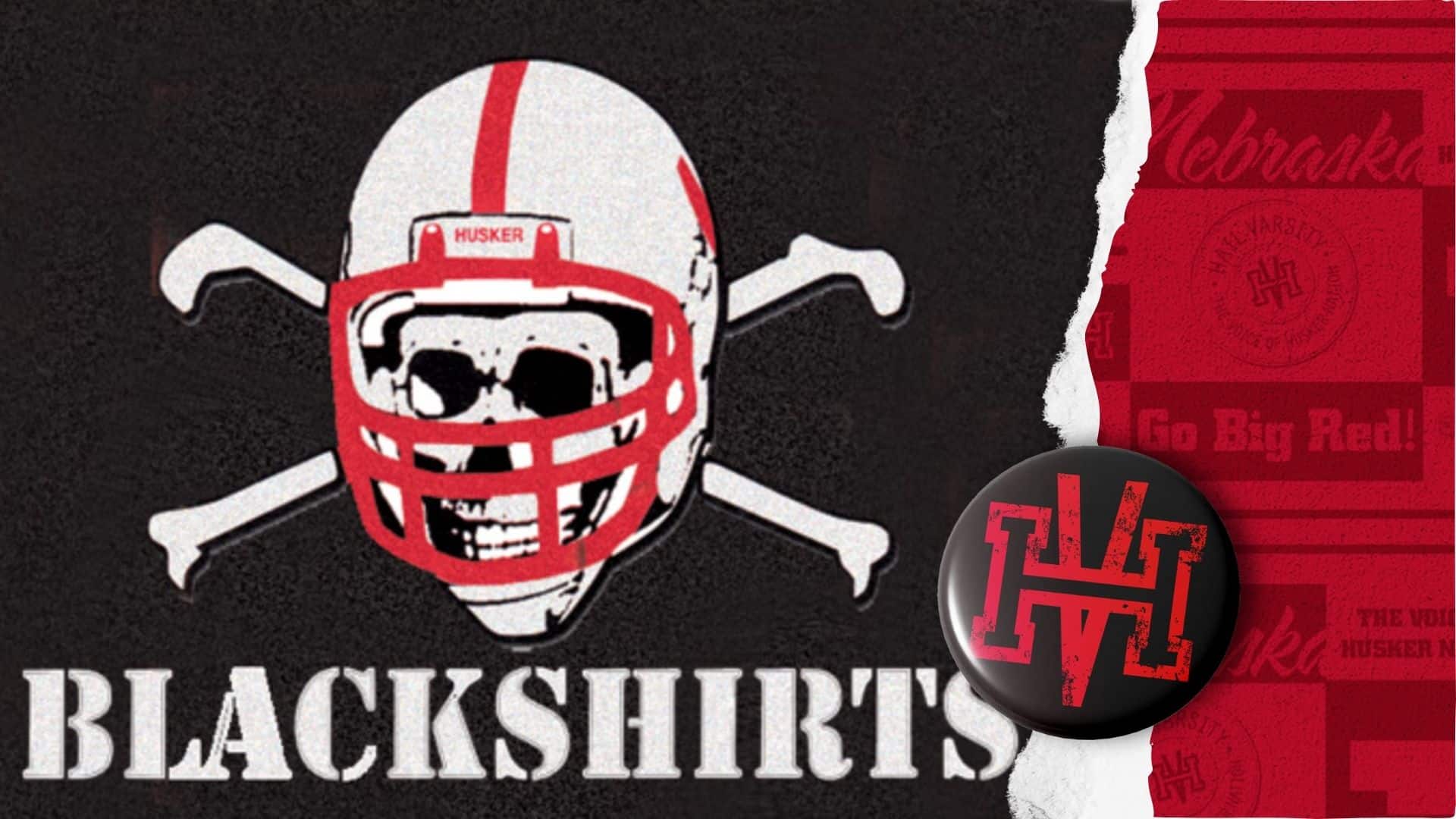
The term “Blackshirts,” referring to the first-team (and sometimes more) players, dates to the second week of the 1964 season, the year in which NCAA rules were instituted allowing two-platoon play. Prior to that, limited substitution meant most players had to be used on offense and defense.
That’s how Coach Bob Devaney handled practices, and the game, the week before the 1964 opener, a 56-0 victory against South Dakota. During the week before the second game, at Minnesota, Devaney decided to have the Huskers begin practicing offense or defense.
When practicing, defenders had worn gray pullovers. That changed.
Offensive backfield coach Mike Corgan, who handled getting equipment, was assigned to get different colored pullovers. Corgan was known for his frugality and as the story goes, a local sporting goods store had black pullovers on clearance. So Corgan bought them.
The black pullovers were distributed to the first-team defenders only and were returned to the equipment room after each practice. They had to be earned each day. That changed under Tom Osborne, and today, more than 11 players can receive them, with names and numbers.
At first, “Black Shirt” was two words. The term first appeared in the 1965 Husker media guide. For a time both “Black Shirts” and “Blackshirts” were used in media guides. The 1978 media guide settles on “Blackshirts,” the acceptable form of a unique Husker tradition.